
Trading Room - Forex signals a
Finansoft LtdFinance
4.575.00 Reviews
- Version
- 2.9
- Installs
- 100.00K
- Age Rating
- Everyone
Screenshots
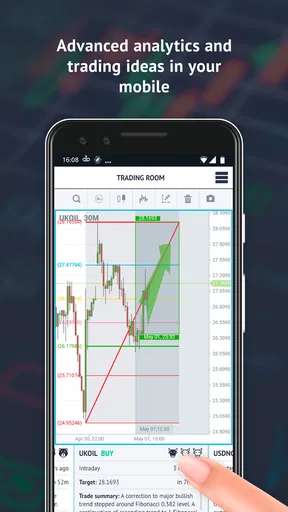
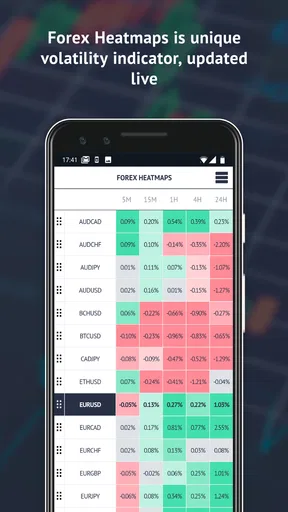
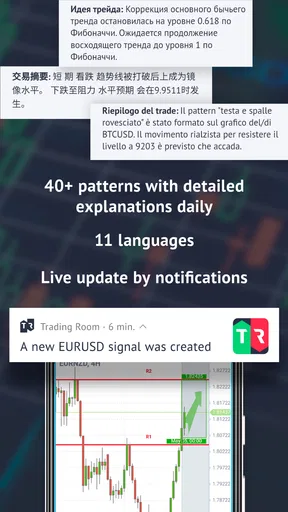
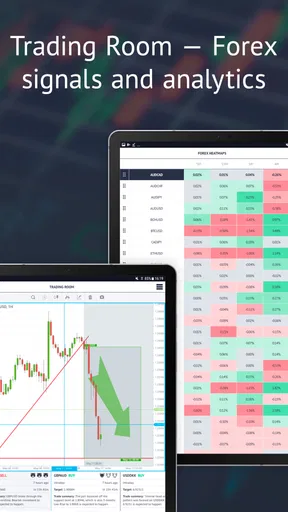
Our Review of Trading Room - Forex signals a
 Analysis by Appyee
I approached Trading Room - Forex signals a as a practical finance app rather than a complete trading platform. Its main appeal is straightforward: it brings frequent trading ideas into one place and adds an FX heatmap for seeing where currency strength and weakness may be developing. That combination can be useful when I want a quick market-reading routine, but it also requires discipline. A signal is a starting point for research, not a substitute for a plan, risk limits, or an understanding of what I am buying.
The app comes from Finansoft Ltd and is available free of charge, with optional in-app purchases ranging from $15.99 to $79.99 per item. It is rated for Everyone, runs on Android 7.1 and later, and the current version is 2.9. Those details make it accessible to a broad audience, including a household where more than one person may use the same device. Still, accessibility should not be confused with suitability: foreign-exchange trading can expose money quickly, so the person using the app needs to understand the decisions behind every idea.
How Trading Room fits into a shared household routine
I find a shared review of market ideas most useful when everyone knows the app is a discussion aid, not a household trading vote. A simple routine—one person raises an idea, while each user checks the reasoning independently—can make disagreements easier and reduce pressure to act. That leads to a more important question: how to keep access, decisions, and personal financial responsibility clear.
A realistic evening use case
Imagine one person in a household follows currency markets before work, while another checks financial news in the evening. On a shared tablet or phone, this app can act as a common viewing point for discussing what is happening in the market. One user might open the ideas for a quick overview, while the other studies the FX heatmap to see whether the suggested direction is supported by broader currency movement.
That workflow is more useful than simply forwarding a signal in a message. A forwarded idea can lose its context, while looking at the app together encourages a short conversation: Which currency pair is involved? What time frame seems relevant? Is the idea consistent with the heatmap, or does the visual suggest a more mixed picture? I like this approach because it turns the app into a prompt for analysis instead of treating it as an automatic answer.
There is an important household boundary, however. The app is not a shared trading account. It is an information and analysis tool, while any actual order would be placed through a separate broker or trading service. If two people use the same device, they should keep their brokerage logins, payment details, and personal trading records separate. Trading Room may help them discuss market ideas, but it should not be treated as a place where everyone in the household has the same financial authority.
Why the shared screen can help and hinder
The heatmap is particularly suitable for a quick shared review because it gives both users something visual to discuss. Instead of debating a single alert in isolation, we can look for a wider pattern across currencies. That does not make the analysis correct, but it helps prevent a narrow reaction to one attractive-looking idea.
The downside is that a shared device can blur responsibility. If one person taps through an idea and another later assumes it was approved, confusion can follow. I would make a simple household rule: the person placing a trade must independently verify the instrument, timing, position size, and exit plan. The app can support coordination, but it should never become the household’s unofficial decision-maker.
Who benefits most from this arrangement
I see the strongest fit for adults who already know the basics of currency trading and want a compact source of ideas to investigate. It can also suit a learner who is comparing signals with independent chart work, provided the learner understands that observing an idea is different from copying it with real money.
It is less suitable for a family member who expects a simple “buy” or “sell” instruction. The app’s value depends on interpretation. Someone who does not understand leverage, volatility, spreads, or the effect of timing may be exposed to risks they cannot evaluate. For that person, educational material and a practice environment would be a better first step than relying on a signal-focused app.
Setup boundaries, coordination, and trust
Before sharing a device or talking through an idea, I would agree on who is responsible for any eventual trade and keep brokerage access and payment choices personal. The heatmap can help household members compare perspectives, but it cannot establish that an idea suits someone else’s circumstances or risk tolerance. With those boundaries in place, coordination can support thoughtful discussion without turning trust into an expectation to follow along.
Starting without confusing information with execution
My first recommendation is to define the app’s role before using it. Trading Room can provide ideas and a heatmap, but it does not remove the need for a separate process. I would open the app, note the idea that interests me, and then check it against an independent chart, current market conditions, and my own risk rules. Only after that would I decide whether it deserves attention in a brokerage account.
This small separation is one of the most useful habits for avoiding impulsive trades. If the app is open next to a broker, the temptation to act immediately can be strong. A better workflow is to write down the reason for considering a trade before opening the order screen. If I cannot explain why the idea fits my plan, I skip it. That makes the app a filter for research rather than a trigger for hurried action.
Because the app is free to install but offers paid items, I would also decide in advance whether the free experience is enough for my needs. Optional purchases should be judged by whether they improve a specific workflow, not by the assumption that paying will make a trade more accurate. No paid access can remove market uncertainty, and spending more should never become a reason to trade more often.
Keeping separate users and accounts clear
On a shared phone, I would avoid leaving personal financial information visible and would not let another household member use my broker session. The app itself can be viewed as a common research tool, but the financial account connected to any eventual trade belongs to the individual responsible for it. That distinction matters even between partners or close relatives.
A practical arrangement is to agree on a shared discussion time while keeping personal notes private. For example, two adults might review the same heatmap, then each decide separately whether the market fits their own tolerance for loss. This prevents one person’s confidence or caution from silently becoming the other person’s trading plan.
I would also avoid presenting a signal as a promise. When discussing an idea with a family member, I would describe it as “something to investigate” rather than “the trade we should take.” That wording sounds minor, but it protects against social pressure. A household member should be able to disagree, wait, or decline without feeling that they are ignoring an authoritative instruction.
Using the heatmap more intelligently
The FX heatmap is most useful to me as a context check. If an idea points toward a currency that also appears broadly strong or weak across several pairs, that may support further investigation. If the visual picture is contradictory, I treat the idea with more caution rather than forcing the two views to agree.
One non-obvious benefit of this approach is that it can expose concentration. A household might think it is considering several different trades, while the same currency appears in each one. Looking across the heatmap can reveal that the positions are connected by one underlying theme. That does not automatically make them wrong, but it does mean the household may be taking more similar risk than it realizes.
I also prefer checking the heatmap at a consistent time instead of opening it repeatedly whenever the market moves. Frequent checking can create the illusion of control and encourage overtrading. A scheduled review makes it easier to compare observations and notice whether an idea still makes sense after the first emotional reaction has passed.
Age context and responsible access
The Everyone content rating describes the app’s general content suitability, not the financial maturity required to use trading ideas responsibly. I would be comfortable with a younger household member viewing the interface alongside an adult for educational discussion, but I would not treat that as permission to make financial decisions or access a brokerage account.
For teenagers, the useful lesson is how market information is evaluated: compare sources, identify uncertainty, and understand that a prediction can fail. The less useful lesson would be that a colorful market display or a confident-looking idea guarantees a result. Adults should explain the difference between learning about currencies and risking money on them.
Trust also matters between adults. If one person is more experienced, that person should explain the reasoning rather than simply instructing the other to follow. The app can support a conversation, but it should not be used to pressure a partner, relative, or housemate into a trade. Shared access should mean shared understanding of boundaries, not shared control of someone else’s funds.
What I would check before paying
The optional purchase range makes it sensible to test the everyday workflow first. I would ask myself whether I am actually using the ideas and heatmap to improve a repeatable research process, or merely opening the app when I feel uncertain. If it is the latter, paying for additional access may reinforce dependence instead of improving judgment.
I would also consider how often I trade. Someone who studies currency markets regularly may get more practical value from a dedicated charting platform, economic calendar, and broker research tools used together. Someone who wants a compact stream of ideas may find Trading Room more convenient. The trade-off is convenience versus depth: the app is appealing as a focused companion, while a broader toolkit may be better for detailed analysis.
Where it falls short compared with usual alternatives
Compared with a full brokerage app, Trading Room is narrower. A broker usually handles orders, account balances, and position management, whereas this app’s appeal is the research layer. That separation is helpful because it can create a pause before execution, but it also means I need to move between tools and verify everything myself.
Compared with a charting application, the heatmap offers a fast overview rather than the same kind of detailed chart study. I would not rely on it alone for entry timing or for understanding a sudden price move. Compared with manually reading financial news, the daily ideas are more focused, but they may also encourage me to look at the market through a predefined set of possibilities. Independent research remains important.
For a beginner, a demo account and structured educational course may be the better alternative. For an experienced trader who already has a strong process, this app may be useful as an additional idea source, but only if it does not disrupt that process. I would skip it if I wanted automated execution, portfolio management, or a single application that handles research and orders from start to finish.
My practical workflow after testing the concept
I would use the app in four stages. First, I would scan the available ideas without immediately choosing one. Second, I would use the heatmap to look for broader currency relationships and possible concentration. Third, I would verify the idea elsewhere, including the chart and the current context. Finally, I would record why I accepted or rejected it.
The last step is easy to overlook, but it is where the app can become genuinely educational. After several weeks, my notes could show whether I am attracted to certain currencies, whether I act too quickly after seeing an idea, or whether the heatmap helps me avoid weak setups. Without that record, it is difficult to know whether the app improves my decisions or simply gives me more market noise.
I would never judge the app by the number of ideas I act on. A successful routine may involve reviewing many ideas and taking none. That is especially true when a shared household is involved, because the pressure to demonstrate activity can be stronger when another person is watching. The best outcome may be a clearer decision to wait.
Adoption and maturity
The app has reached more than one hundred thousand installs and holds a 4.5 average from around 2.6 thousand ratings, which suggests that it has found an audience beyond a tiny group of specialists. There are also around seventy-five written reviews, giving prospective users some indication that people engage with it rather than merely downloading it.
I would still treat popularity as background information, not evidence that a particular idea will work for me. Trading outcomes depend on execution, timing, costs, and personal risk management. A well-liked app can be useful and still be unsuitable for a person who needs a more controlled learning environment.
Household verdict
After looking at it as both a finance tool and a shared-device app, I think Trading Room is best used as a conversation starter and research companion. Its combination of trading ideas and an FX heatmap gives me a compact way to scan the currency market, identify themes, and decide what deserves deeper checking.
My main recommendation is to keep the app separate from the act of placing a trade. Use it to form questions, not to outsource judgment. On a household device, keep brokerage accounts and payment decisions personal, make the person executing a trade responsible for the final checks, and treat the Everyone rating as a content label rather than financial guidance for children.
For an adult who already understands the risks of forex and wants an additional source of ideas, the free entry point makes it worth exploring. The optional purchases should be considered carefully, especially if the app becomes a source of emotional reassurance rather than analysis. For a beginner seeking step-by-step education, automated trading, or an all-in-one broker, I would choose a different type of tool.
In my view, the app earns its place when it helps a household slow down, compare perspectives, and notice connections between currency pairs. It loses value when a signal is treated as an instruction. Used with that boundary in mind, Trading Room can add structure to market research without pretending to replace experience, independent verification, or responsible financial decisions.
Verdict
Strengths of Trading Room - Forex signals a
- Clear forex signals with entry, stop-loss, and take-profit levels.
- Useful for traders who want ideas without constant market monitoring.
- Signal history helps users review previous recommendations.
- Covers multiple currency pairs for broader trading opportunities.
- Simple interface makes the app easy to navigate for beginners.
Limitations of Trading Room - Forex signals a
- Signals may arrive late during fast-moving market conditions.
- No signal can guarantee profits, even when analysis looks convincing.
- Some features or signals may require a paid subscription.
- Limited educational content for users learning forex fundamentals.
- Frequent notifications may become distracting during busy trading periods.
Similar Picks in This Category
View All
Google Wallet
Google LLC4.3

Airtel: Recharge, Bank & Loans
Airtel4.0

PayPal - Pay, Send, Save
PayPal Mobile4.2

DANA Indonesia Digital Wallet
PT Espay Debit Indonesia Koe4.5

Binance: Buy Bitcoin & Crypto
Binance Inc.4.8

Cash App
Block, Inc.4.7
Frequently Asked Questions
What is Trading Room - Forex signals and how does it work?
Trading Room - Forex signals is designed to provide users with market analysis, currency-trading ideas, and notifications about potential entry and exit points. After opening the app, you can review available signals, examine the suggested currency pair and direction, and decide whether the information fits your own strategy. It should be treated as an analytical tool, not an automatic guarantee of profitable trades.
Are the forex signals suitable for beginners?
The app may be useful for beginners who want to learn how traders interpret market movements, but some basic knowledge of forex terminology is recommended. Users should understand concepts such as currency pairs, pips, stop-loss orders, take-profit levels, leverage, and risk management before acting on a signal. New traders should practice with a demo account and avoid risking money they cannot afford to lose.
Can Trading Room - Forex signals guarantee profitable results?
No forex-signal application can guarantee consistent profits, and Trading Room - Forex signals should not be viewed as a substitute for personal research or professional financial advice. Market conditions can change quickly, signals may arrive late, and even carefully prepared analysis can be wrong. Before placing a trade, review the market independently, consider the potential loss, and use sensible position sizing and protective orders.
Does the app place trades automatically on my behalf?
The app is primarily intended to deliver forex signals and related market information rather than replace your broker or make every trading decision for you. In most cases, users must evaluate a signal and place any order through their own supported brokerage account. Before downloading, check the current app description and permissions carefully, especially if you are concerned about account connections, notifications, subscriptions, or any optional automation features.
Is Trading Room - Forex signals free to download and use?
Availability and pricing can vary by platform, region, and app version. The application may offer free access to some information while reserving additional signals, analysis, alerts, or features for a subscription or in-app purchase. Check the Google Play Store or Apple App Store listing for the latest pricing, trial conditions, renewal details, and cancellation policy before subscribing. Always review the total cost carefully.
